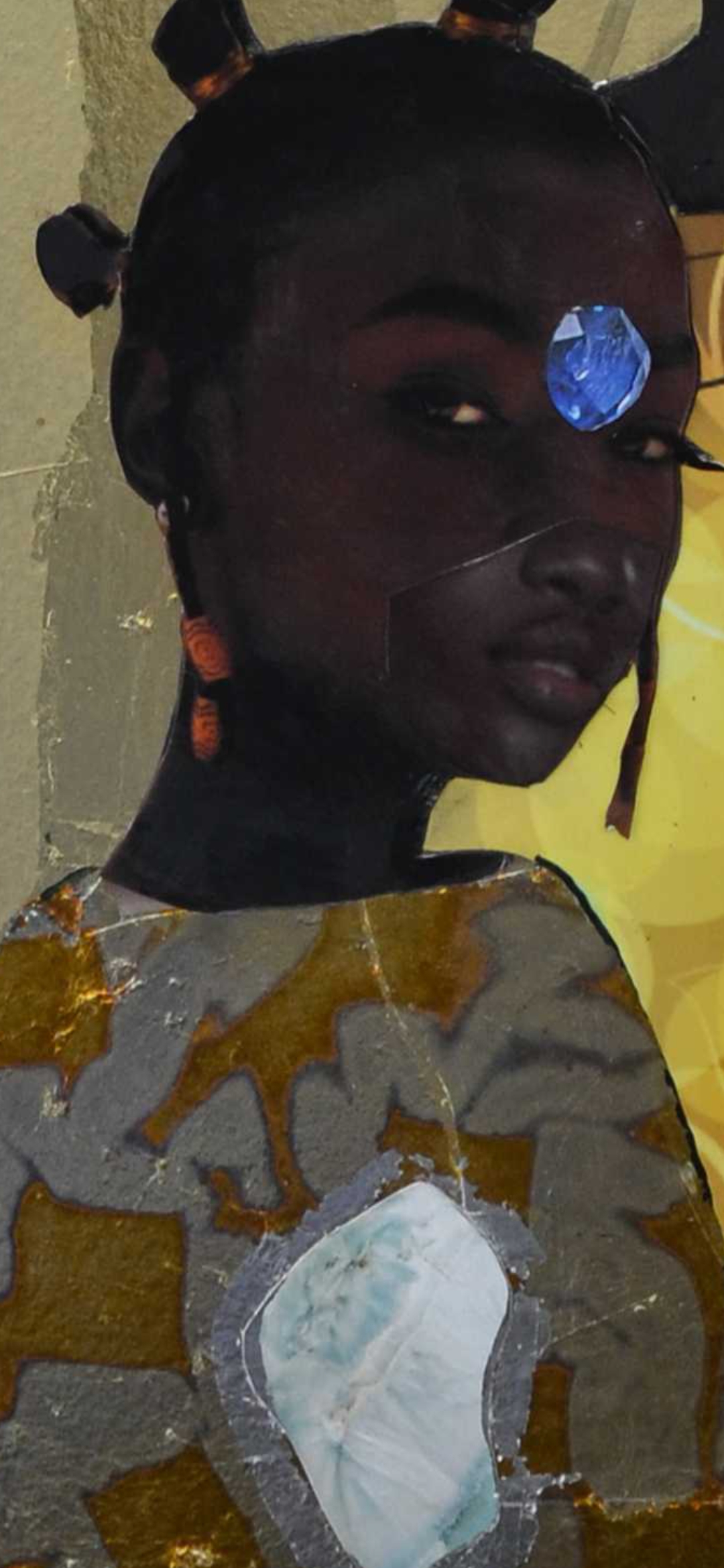
In the heart of the black forest, where the air shimmered with magic and the trees whispered ancient secrets, lived a young huntress named Amani. Her skin was the color of rich mahogany, and her eyes gleamed with determination. Amani was known throughout her village for her exceptional skill with an electric bow and arrow, a gift from the village elders that combined the wisdom of the past with the technology of the future. One early morning, as the first light of dawn filtered through the canopy, Amani set out on a hunt. Her family depended on her to bring back game, and she moved with the grace and silence of a shadow. The forest was alive with the sounds of rustling leaves and distant animal calls, but Amani’s focus was unwavering.Her electric bow, a marvel of engineering and enchantment, hummed softly in her hands.
The arrows, tipped with energy that crackled and sparked, were designed to stun rather than kill, ensuring that the balance of the forest was maintained. Amani’s respect for the forest and its inhabitants was evident in every step she took.As she moved deeper into the forest, she spotted her quarry: a majestic stag with antlers that seemed to glow with an inner light. Amani crouched low, her movements fluid and precise. She notched an arrow and drew back the bowstring, the electric current surging through the weapon.With a deep breath, she released the arrow. It flew through the air with a faint hum, striking the stag and enveloping it in a gentle, stunning light. The stag fell to the ground, unharmed but immobilized. Amani approached with reverence, whispering a prayer of thanks to the forest spirits.
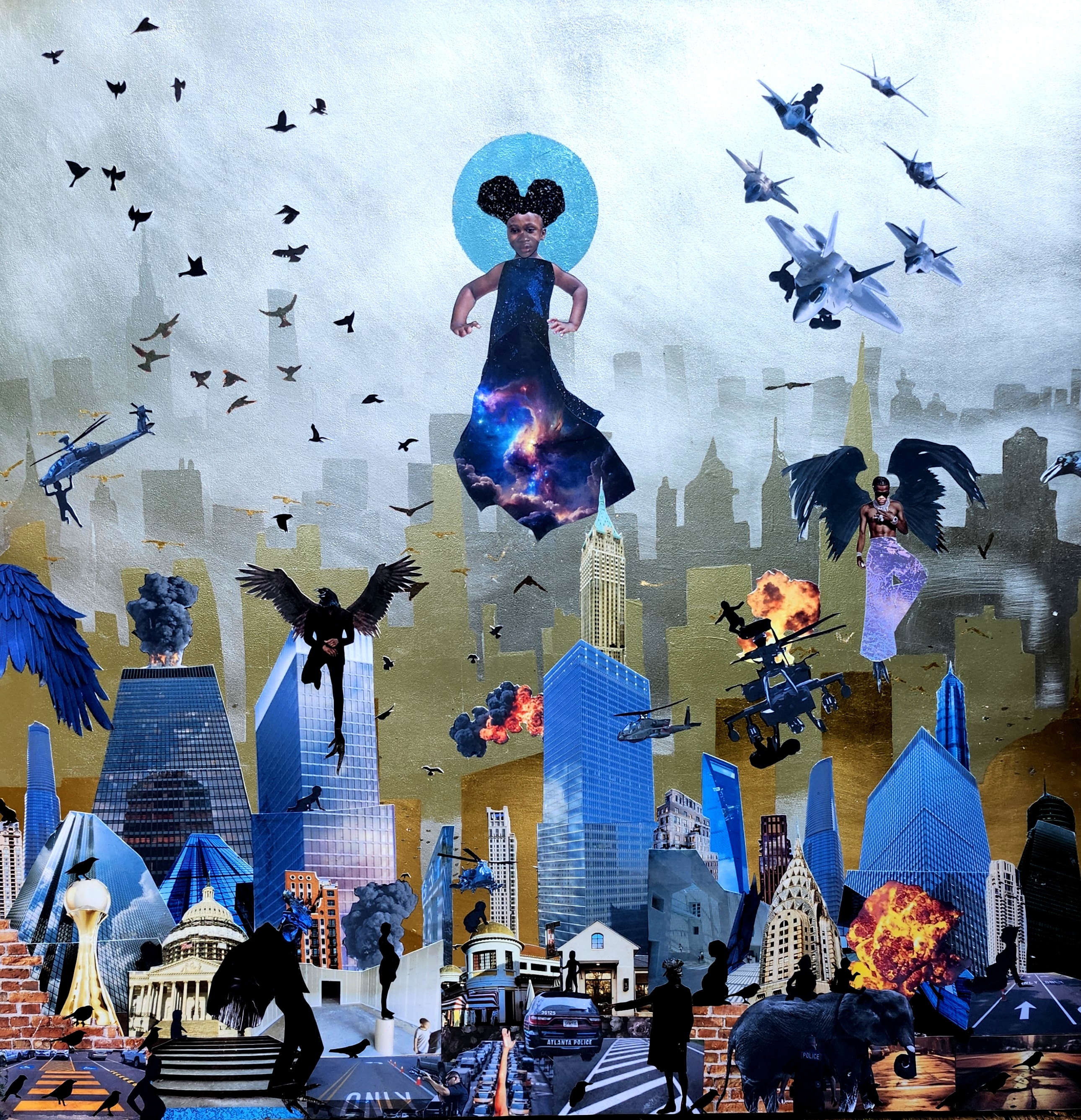
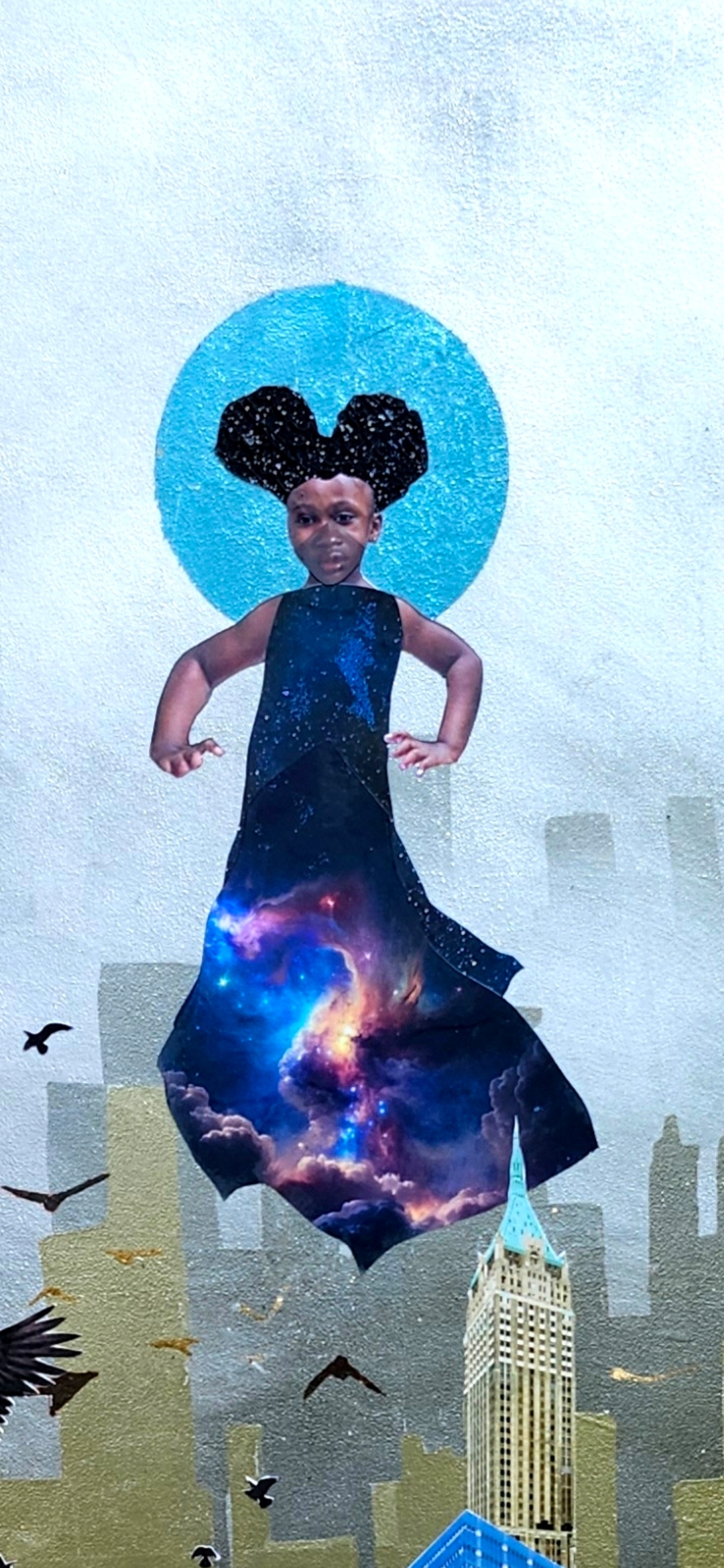
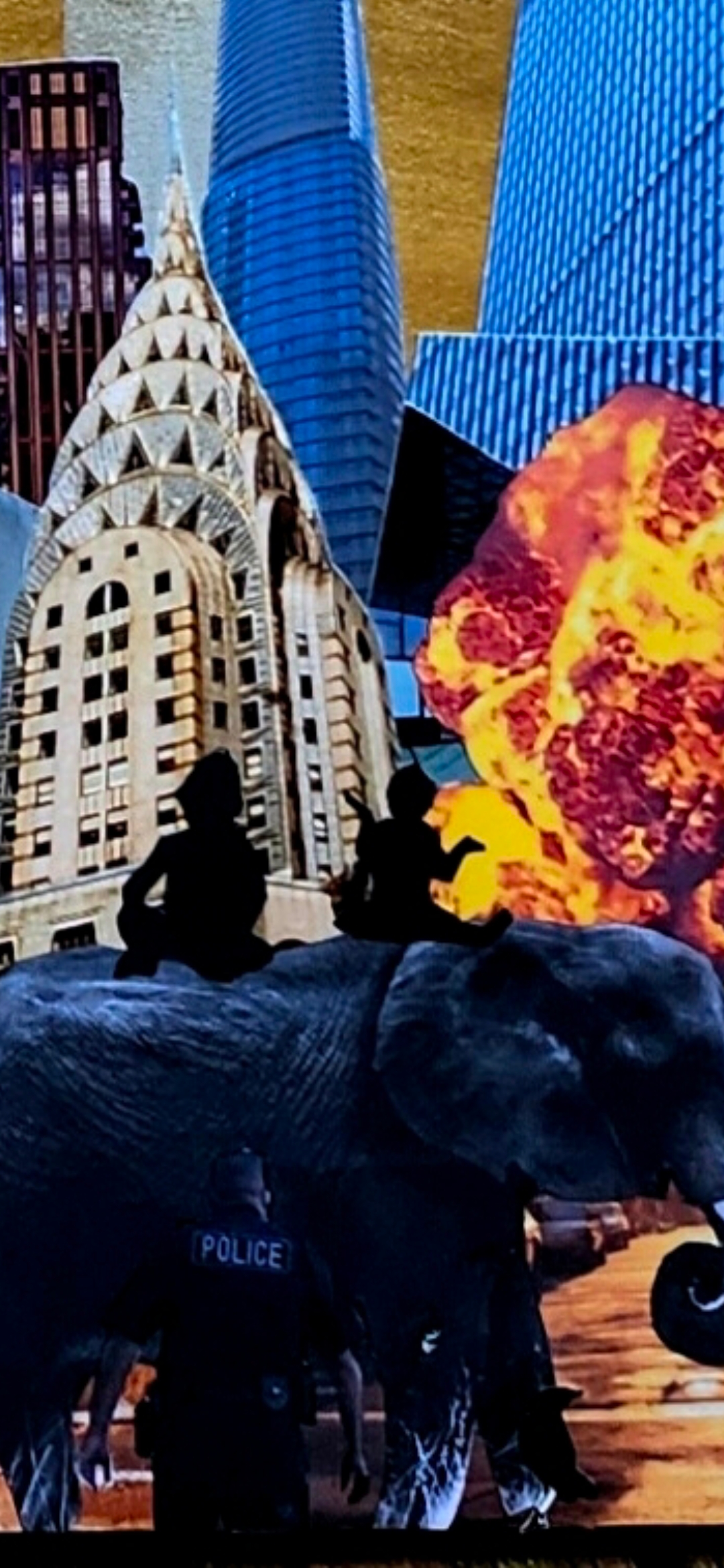
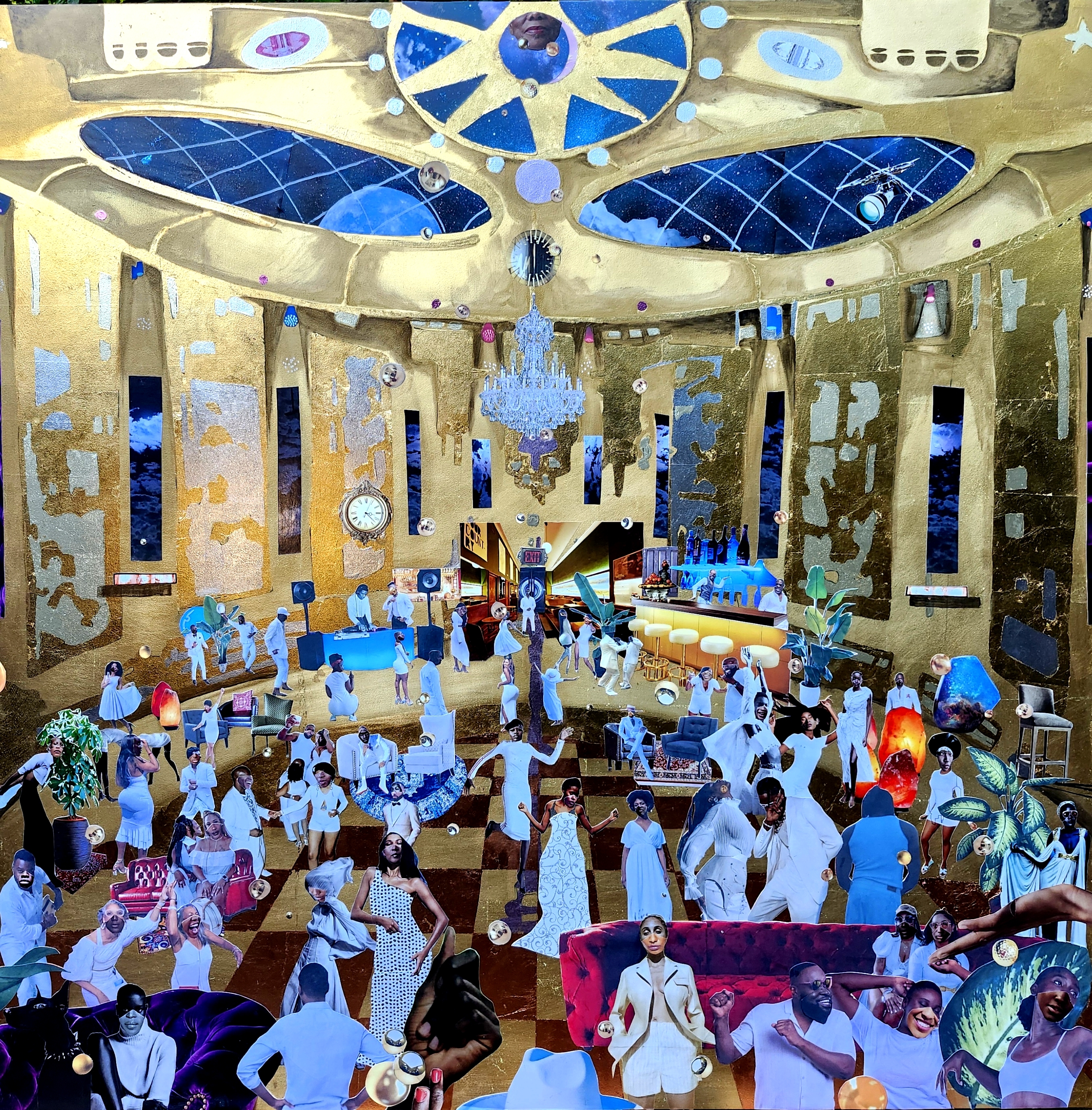
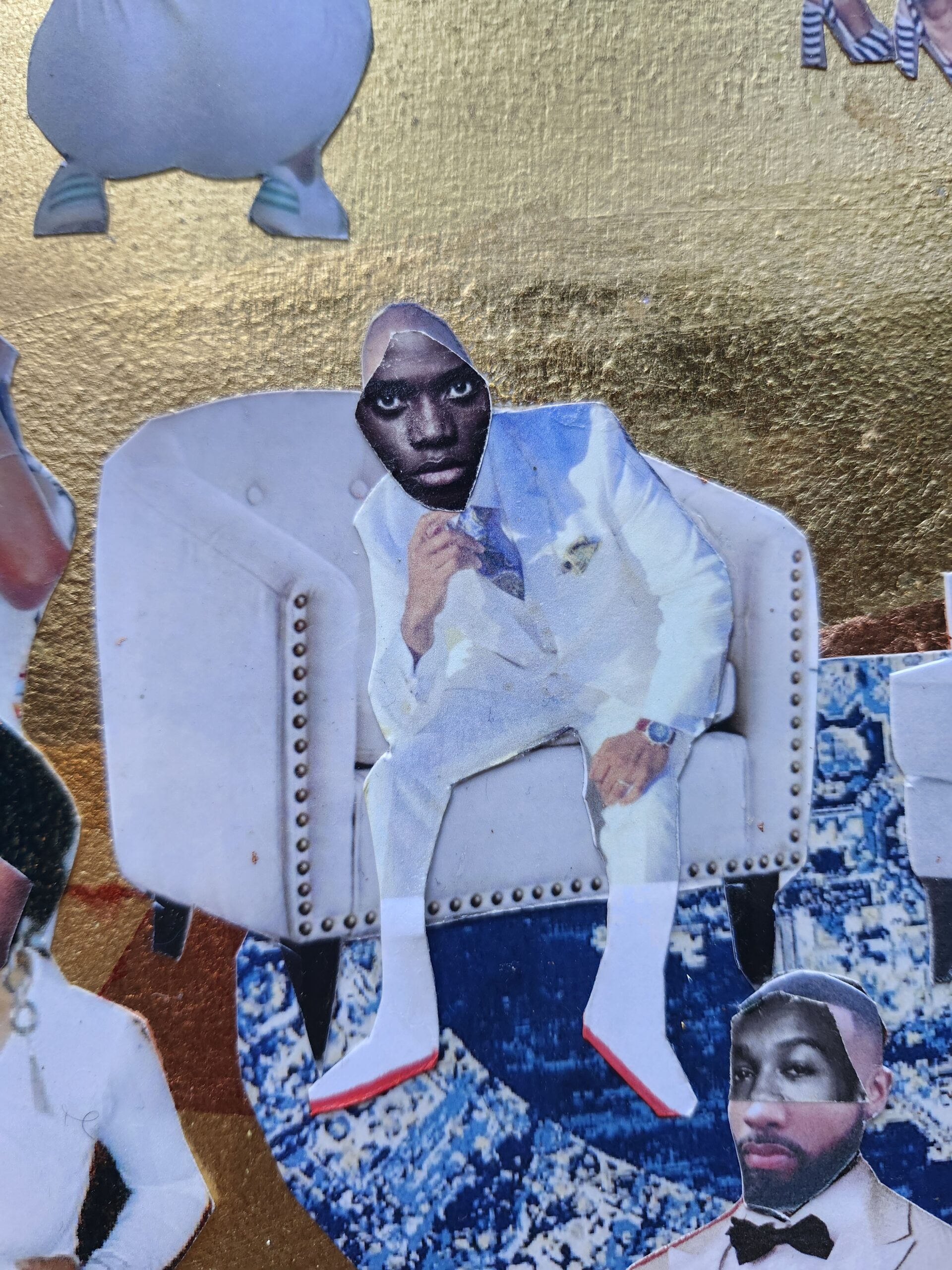
“Dr. Welsing’s Fever Dream” by rEN Dillard is a profound artwork that resonates deeply with the ideals of Dr. Frances Cress Welsing, a renowned psychiatrist and author known for her work on racism and white supremacy. Dr. Welsing’s theories, particularly those presented in “The Isis Papers,” focus on the psychological and societal impacts of racism. She argued that white supremacy is a global system designed to maintain the genetic survival of white people by oppressing people of color. Her work emphasized the importance of understanding these dynamics to combat racism effectively. In “Dr. Welsing’s Fever Dream,”
Dillard uses his signature technique of layering precious metals, collage, and oil paint to create a visually striking piece that reflects these themes. The artwork’s dense, textured scenes and use of gold leaf symbolize the richness and complexity of black identity and experience.
The reflective quality of the precious metals invites viewers to see themselves within the narrative, emphasizing the personal and collective journey towards enlightenment and freedom.The piece can be seen as a visual representation of Dr. Welsing’s ideals, highlighting the ongoing struggle against systemic racism and the quest for self-awareness and empowerment among black individuals. By incorporating elements of Afrofuturism, Dillard not only honors Dr. Welsing’s legacy but also envisions a future where black identity is celebrated and liberated from the constraints of white supremacy.
Dr. Welsing’s Fever Dream, 2024Mixed Media Collage with Gold silver on Panel60 x 60 in (152.40 x 152.40 cm)
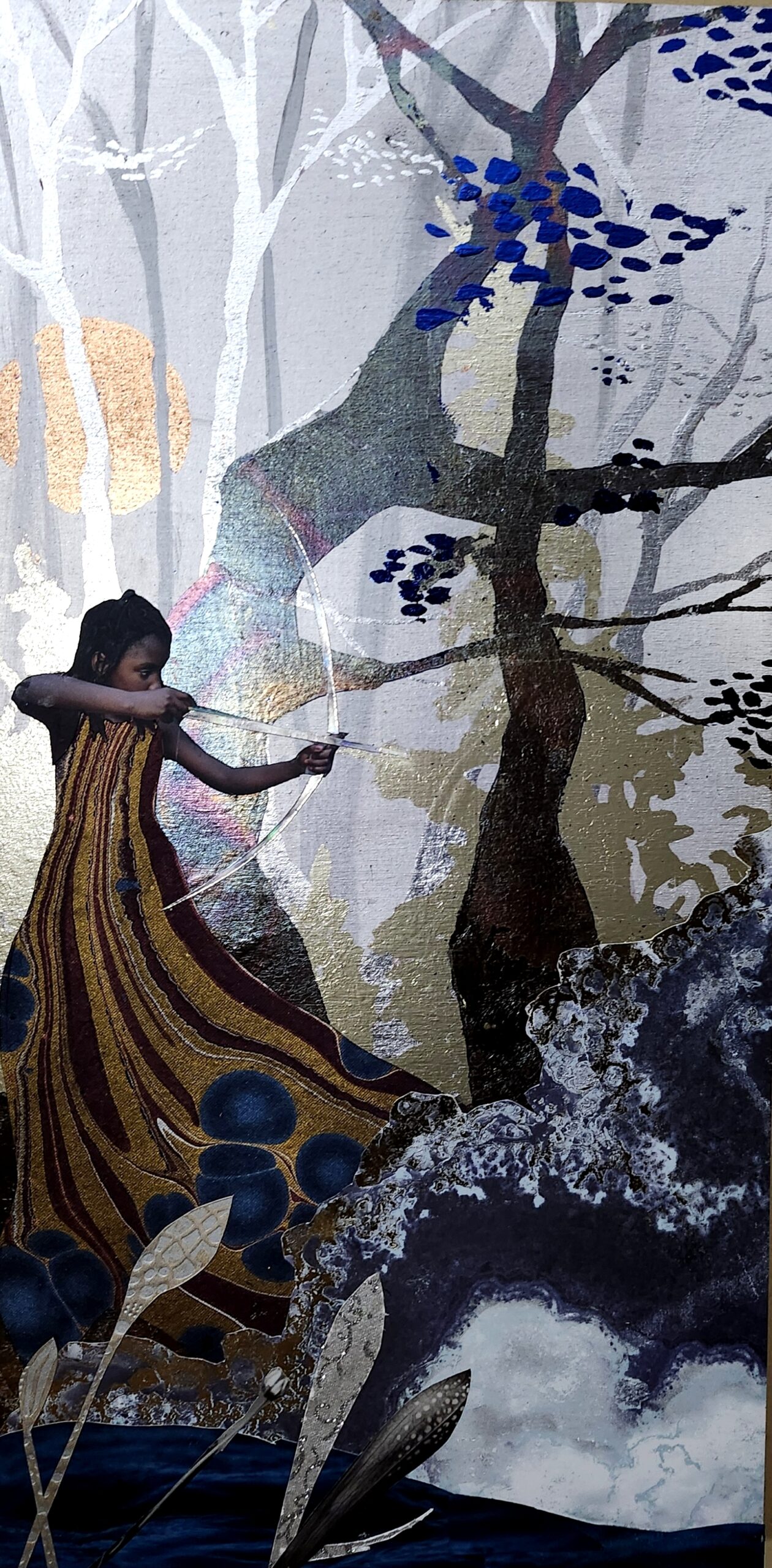
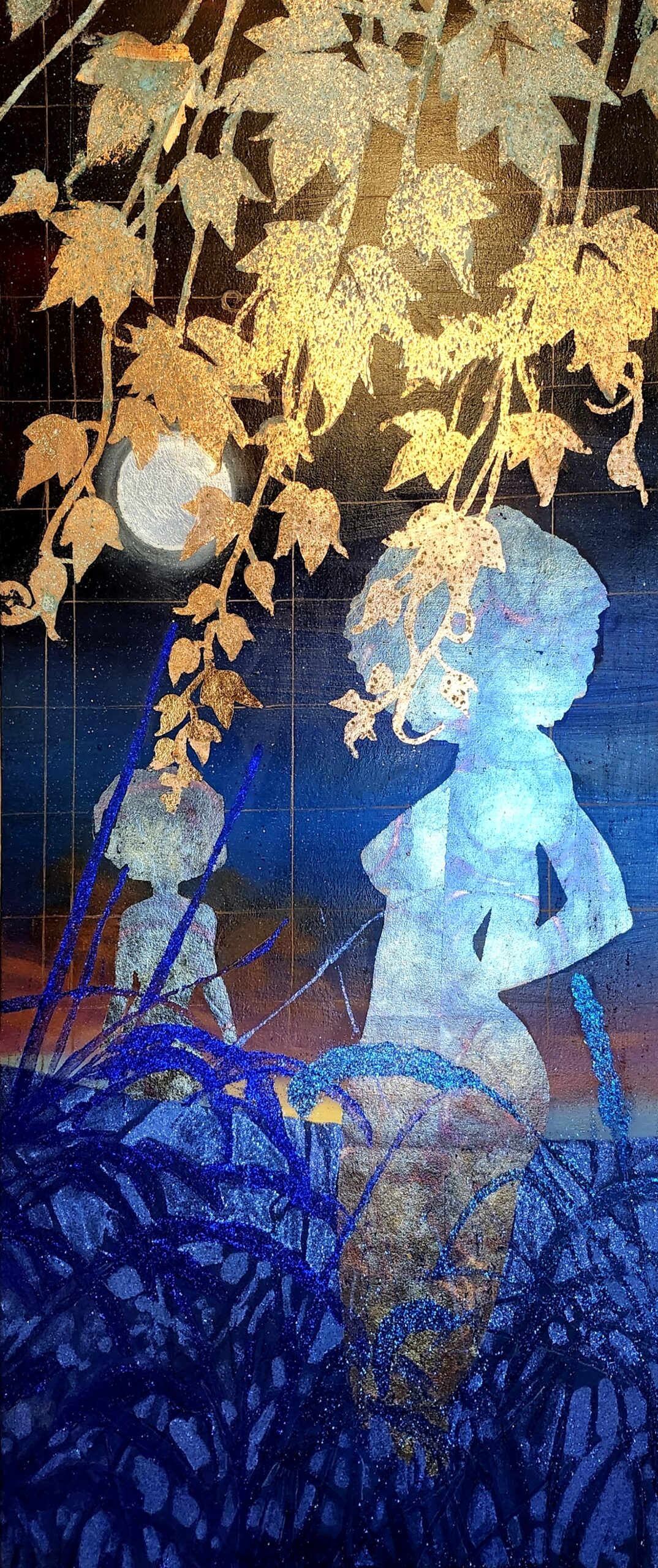
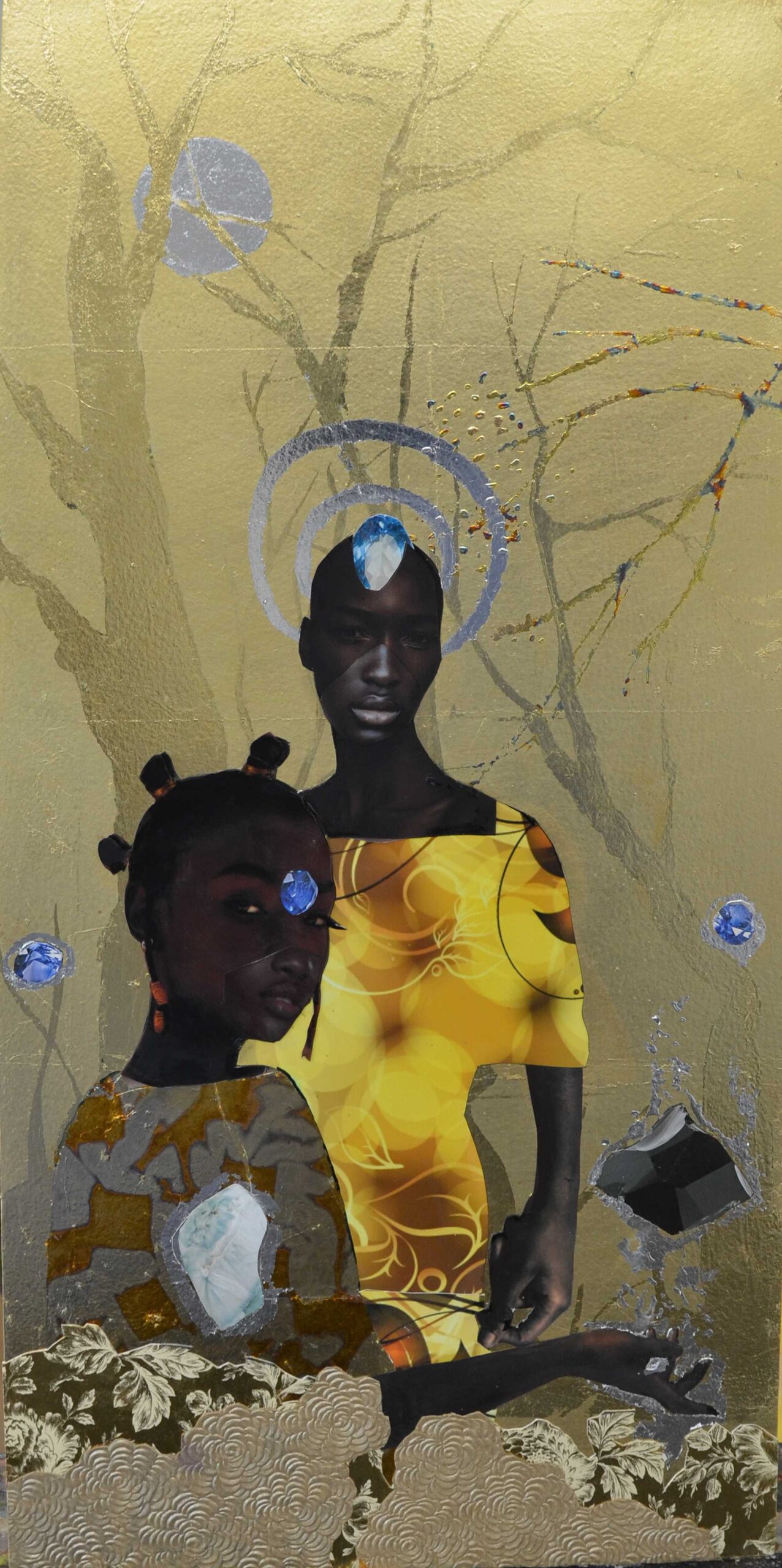
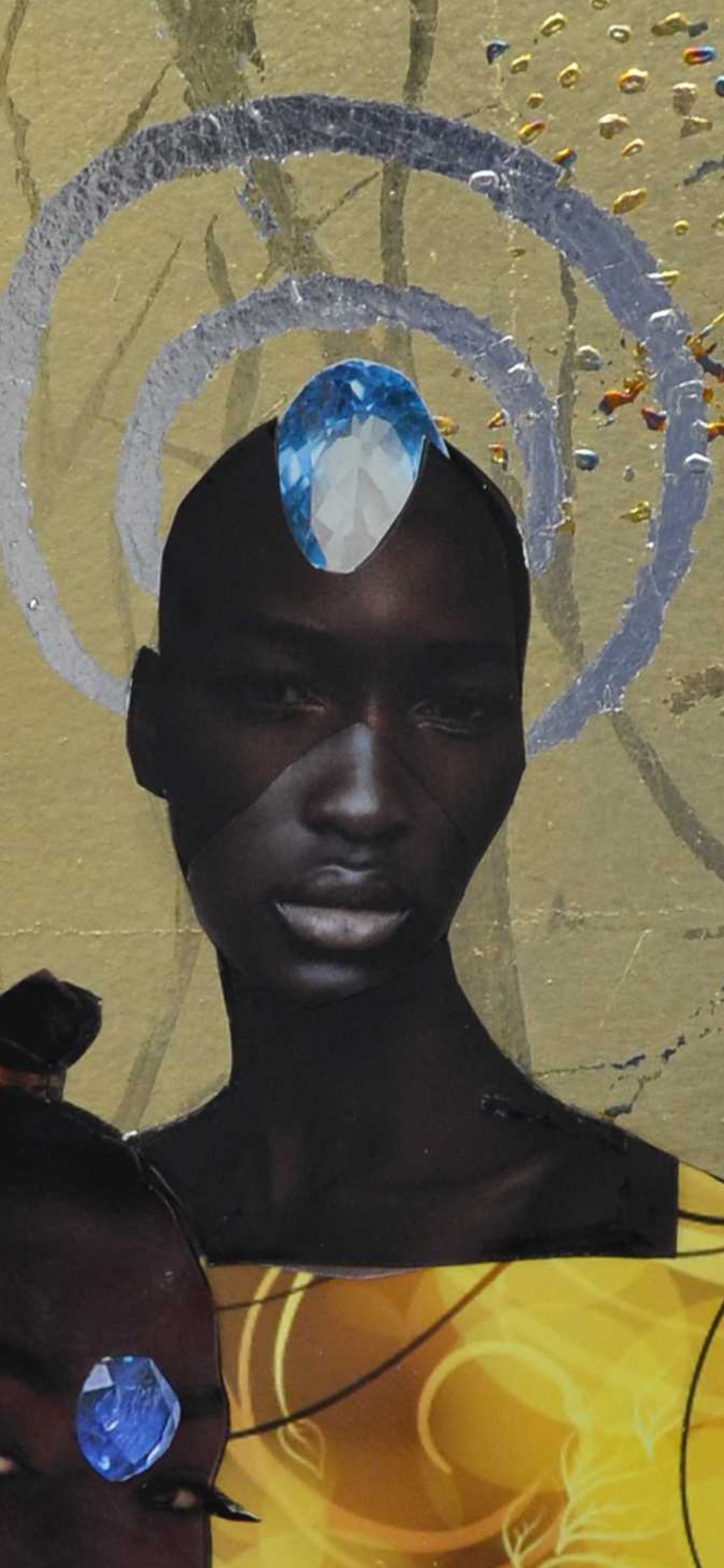
In the ethereal realm where moonbeams dance and stars whisper secrets, two luminous sisters, Deja and Zaire, glided gracefully across the night sky. Born from the moon’s heart, their light was pure and radiant, casting a serene glow over the world below. One night, as they drifted over a vast field of blue crystals, a deep yearning stirred within them—a desire to experience the earthly realm in human form.The moon, sensing their longing, bestowed upon them a rare gift. For one night, Deja and Zaire would take on human forms and explore the crystal field. As they descended, their celestial light transformed into two beautiful women, their hair shimmering like silver threads and their eyes reflecting the moon’s glow. They stood in awe, feeling the cool, crystalline ground beneath their feet, each step creating a symphony of delicate chimes.The field of blue crystals sparkled under the moonlight, casting an otherworldly glow that illuminated the night. Deja and Zaire wandered through this enchanted landscape, their laughter echoing like the sweetest music. They marveled at the beauty around them, the crystals’ azure light intertwining with their own ethereal essence, creating a mesmerizing dance of light and shadow.As they ventured deeper into the field, they discovered a hidden grove where the crystals grew in intricate patterns, forming a natural labyrinth. At the grove’s center stood a magnificent copper tree, its branches reaching towards the sky, adorned with blossoms that glowed with a gentle blue light. Deja and Zaire felt a profound connection to this place, sensing the ancient magic that flowed through it.They sat beneath the crystal tree, sharing stories and dreams, their voices blending with the whispers of the night. They spoke of the moon’s wisdom, the stars’ secrets, and the beauty of the world they had only glimpsed from above. As the night wore on, they realized that their time in human form was drawing to a close, and a sense of bittersweet gratitude filled their hearts.With the first light of dawn breaking on the horizon, Deja and Zaire embraced, knowing that this night would remain a cherished memory. They felt their forms begin to shift, the magic of the moon calling them back. As they ascended into the sky, their human forms dissolved into beams of light once more, their laughter lingering in the air like a gentle breeze.From that night on, the field of blue crystals held a special enchantment. Those who wandered there could sometimes hear the faint laughter of Deja and Zaire, and the copper tree at the grove’s center glowed a little brighter, a testament to the magical night when two moonbeams became human and danced among the stars.
Moonbeams, 2024Oil, Dyed Silver, Blue Chrystalina26 x 67 in (66.04 x 170.18 cm)
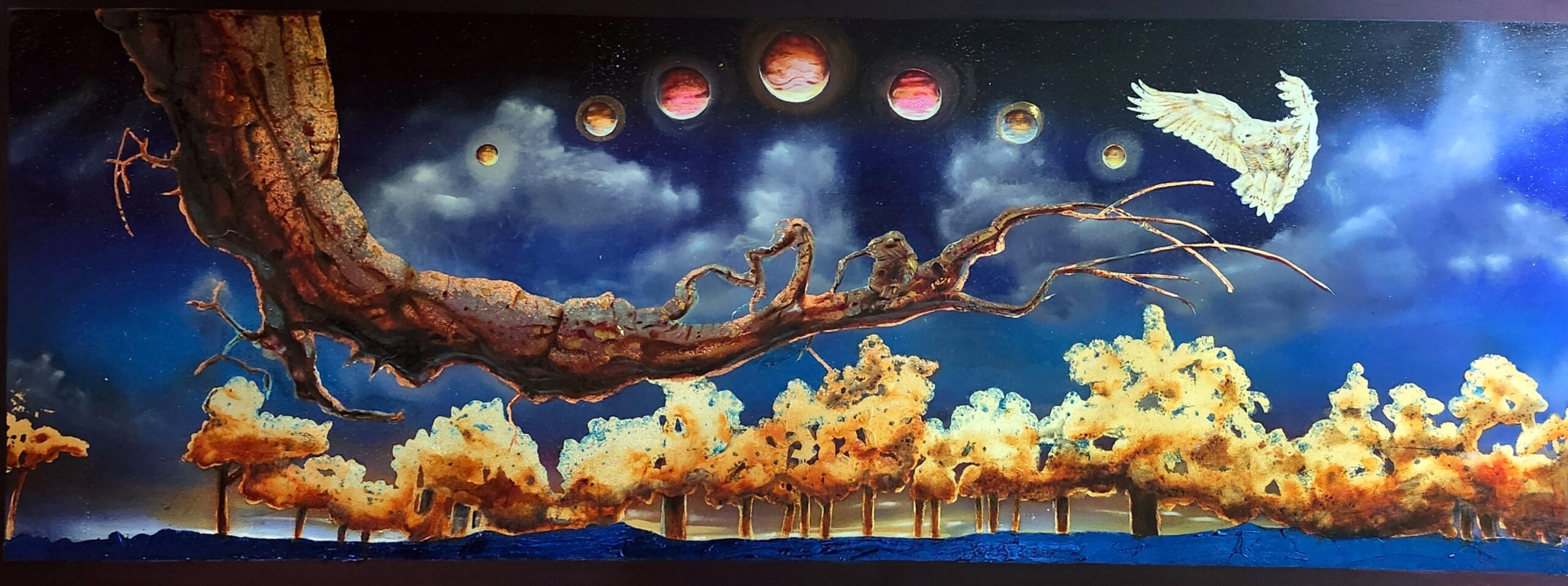
The night sky was a canvas of wonder as seven planets aligned in a rare celestial event. A snow owl quietly perched on a branch below, seemed to understand the profound significance of the alignment.
Oil Paint, Copper, Gold, Dyed Silver, on Canvas 96 x 36 in (243.84 x 91.44 cm)
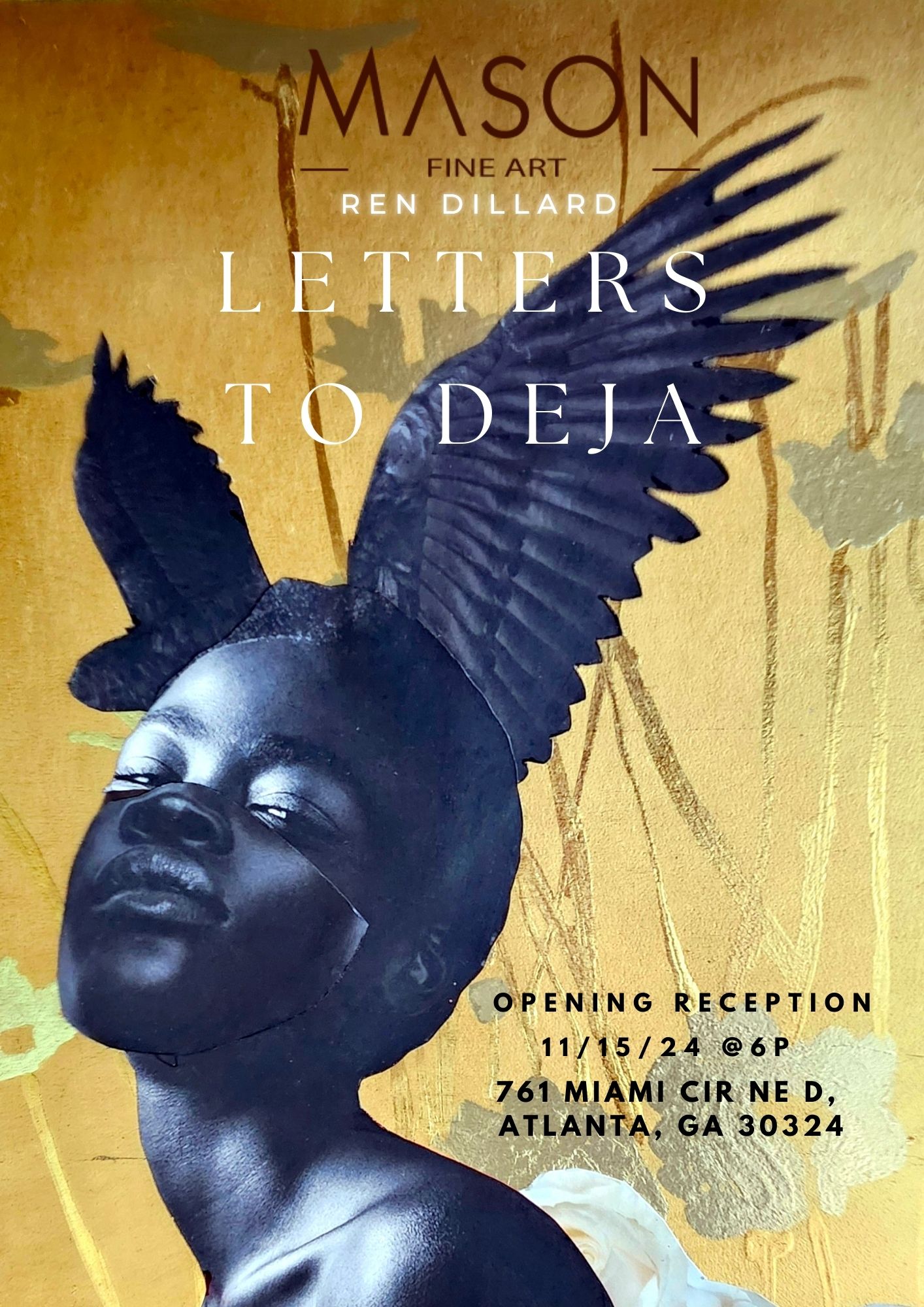
In “Letters to Deja,” Ren Dillard creates a body of work that transcends mere artistic expression, becoming a vessel for personal reconciliation. The exhibition’s title is more than metaphorical; these are visual letters, fragments of a correspondence never sent but always felt. The works vibrate with the emotional resonance of unspoken words, longing, and the ache of estrangement. Dillard channels the intimacy of this father-daughter relationship into a formal language of gilding, oil, and collage, materials that evoke both permanence and fragility, just as relationships do.
Here, art becomes a meditation on distance, not only physical but metaphysical. Dillard’s landscapes, at first glance serene, teem with philosophical undercurrents, as if nature itself holds the key to unlocking deeper truths. His invocation of black girlhood—its strength, its inherent beauty, its resilience—emerges not as a didactic message but as a celebration, honoring his daughter Deja and, by extension, the spirit of black women navigating the world with grace and courage.
What is most striking is the delicate balancing act Dillard achieves between the personal and the universal. While these pieces are a testament to his own story, they also resonate with a broader cultural narrative. His exploration of empowerment, spirituality, and bravery speaks not only to his daughter but to a collective consciousness, particularly within the black community. The metaphysical and the spiritual are not merely subjects of his art; they are the threads binding father to daughter, artist to audience.
“Letters to Deja” is, at its core, an act of bravery in itself—an offering of love, layered and rich with meaning. It suggests that even in silence, even across emotional divides, connection is possible through the alchemy of art. And in that alchemy, Dillard offers us a glimpse not only of his soul but also of the universal longing for understanding and reconciliation. It is this deeply human impulse, rendered with sensitivity and grace, that leaves the most lasting impression.
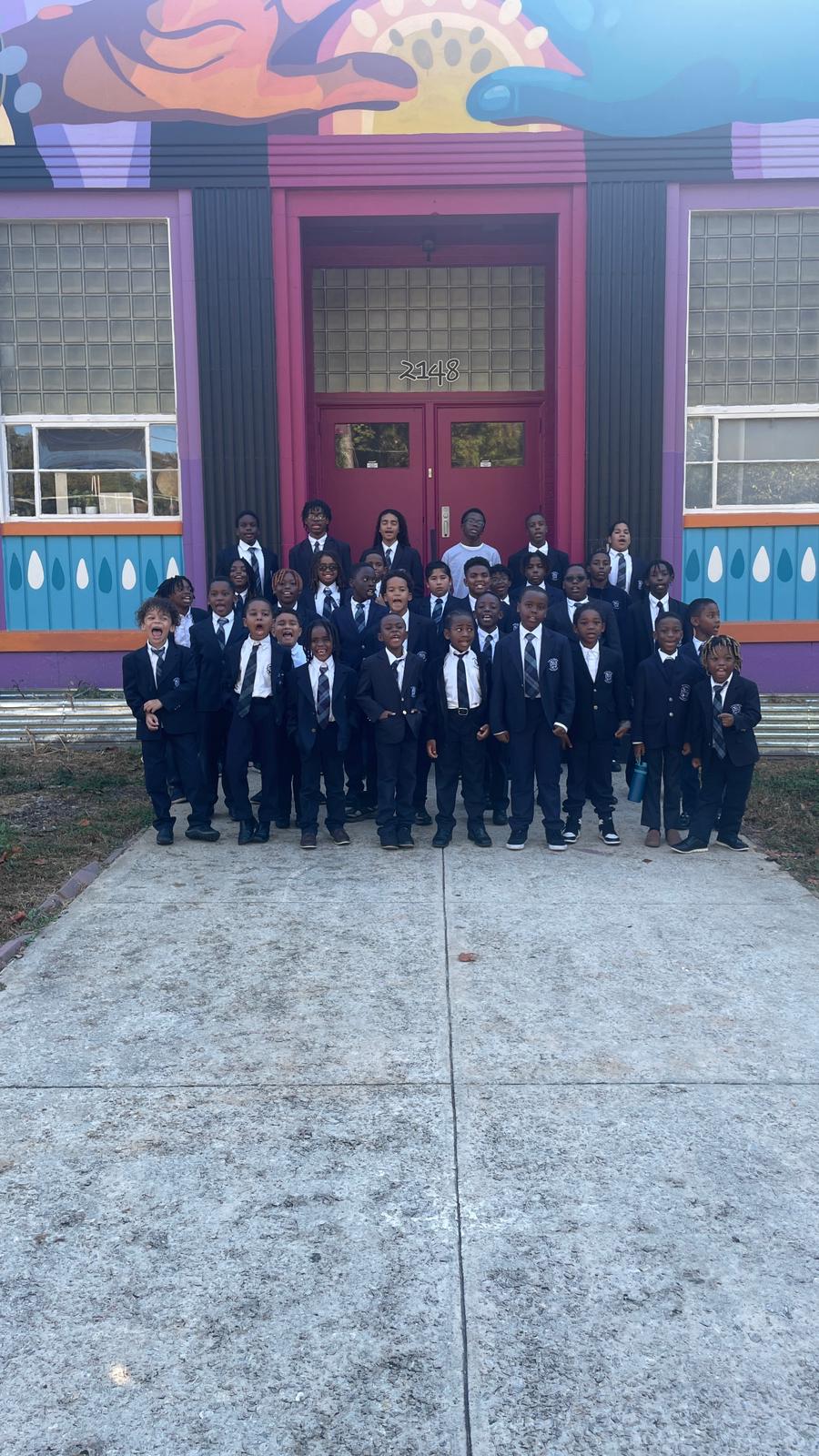
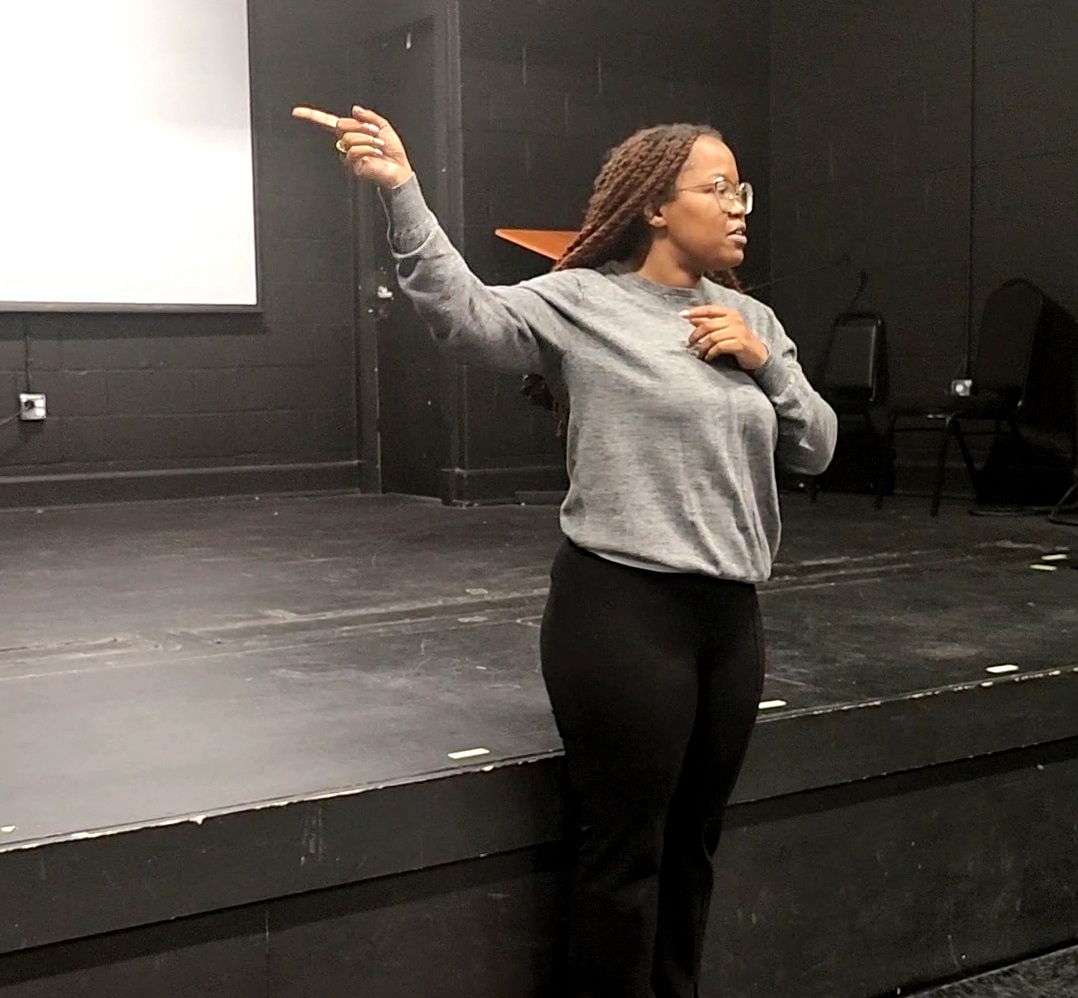
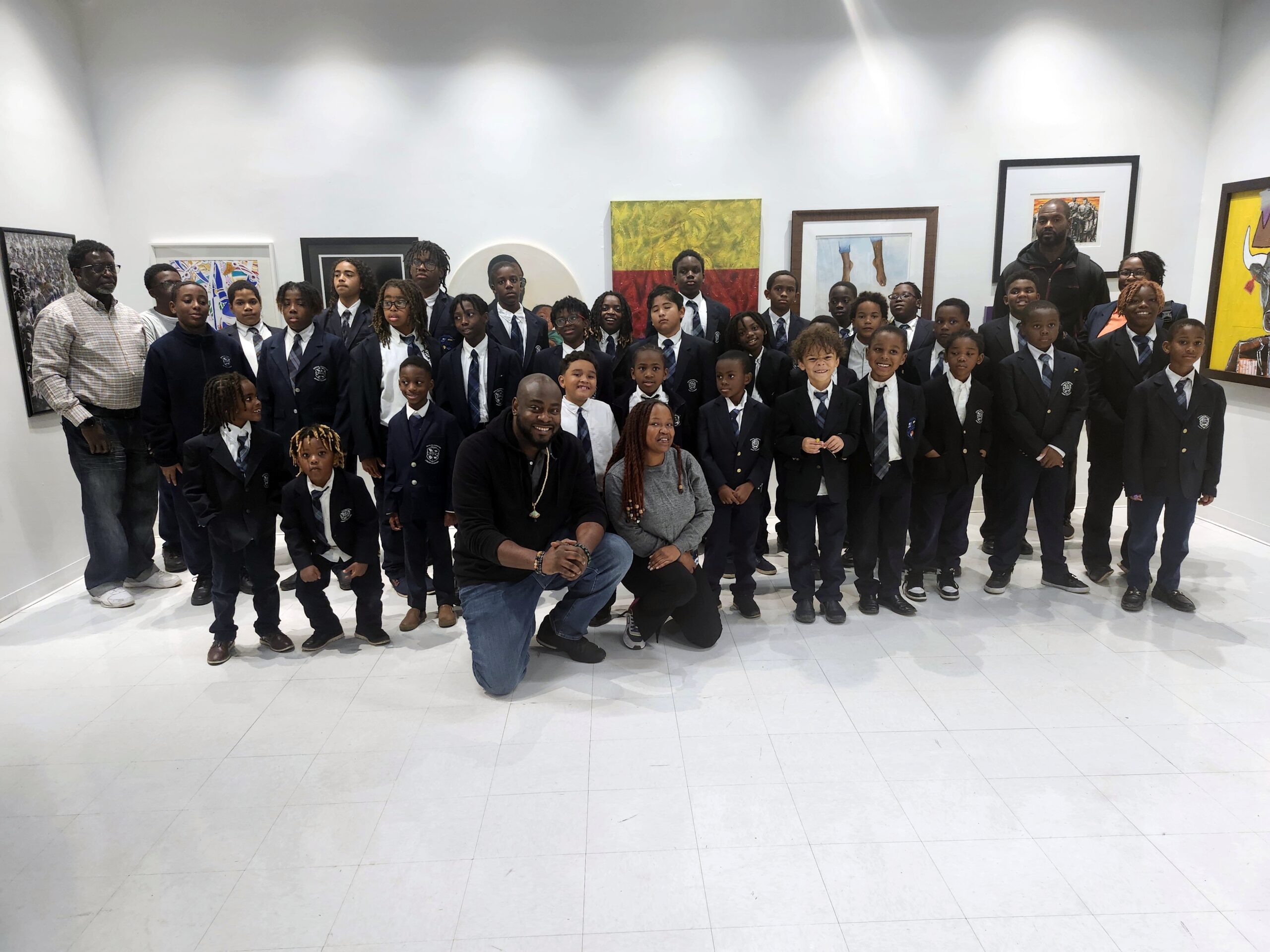
Recently, a group of 35 boys from the private school Berean Christian Junior Academy in Atlanta had an enriching experience visiting the “Hold the Line” exhibition at the ArtsXchange. Their art teacher, Courtney Brooks, believed it was essential for them to explore the themes of black masculinity presented in the exhibition.
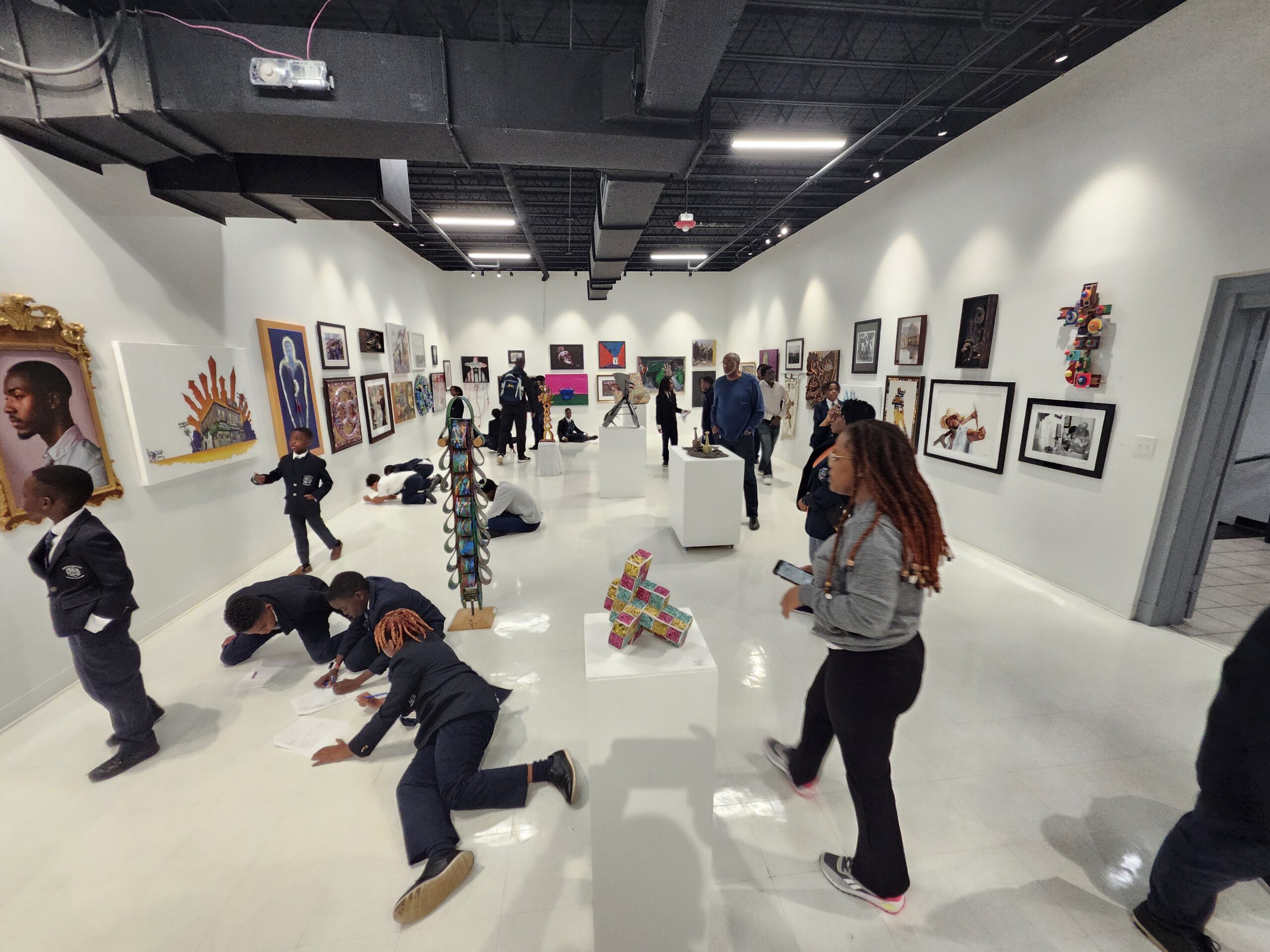
The exhibition, which delves into the complexities and nuances of black masculinity, provided a powerful and thought-provoking experience for the students. The boys were engaged and inspired by the diverse artworks, which ranged from striking paintings, intricate collage, and exquisite sculpture, all created by talented black male artists from Atlanta.
Courtney Brooks emphasized the importance of understanding and appreciating the themes of resilience, identity, and strength depicted in the artworks. She hoped that this exposure would encourage her students to reflect on their own identities and the broader societal narratives surrounding black masculinity.
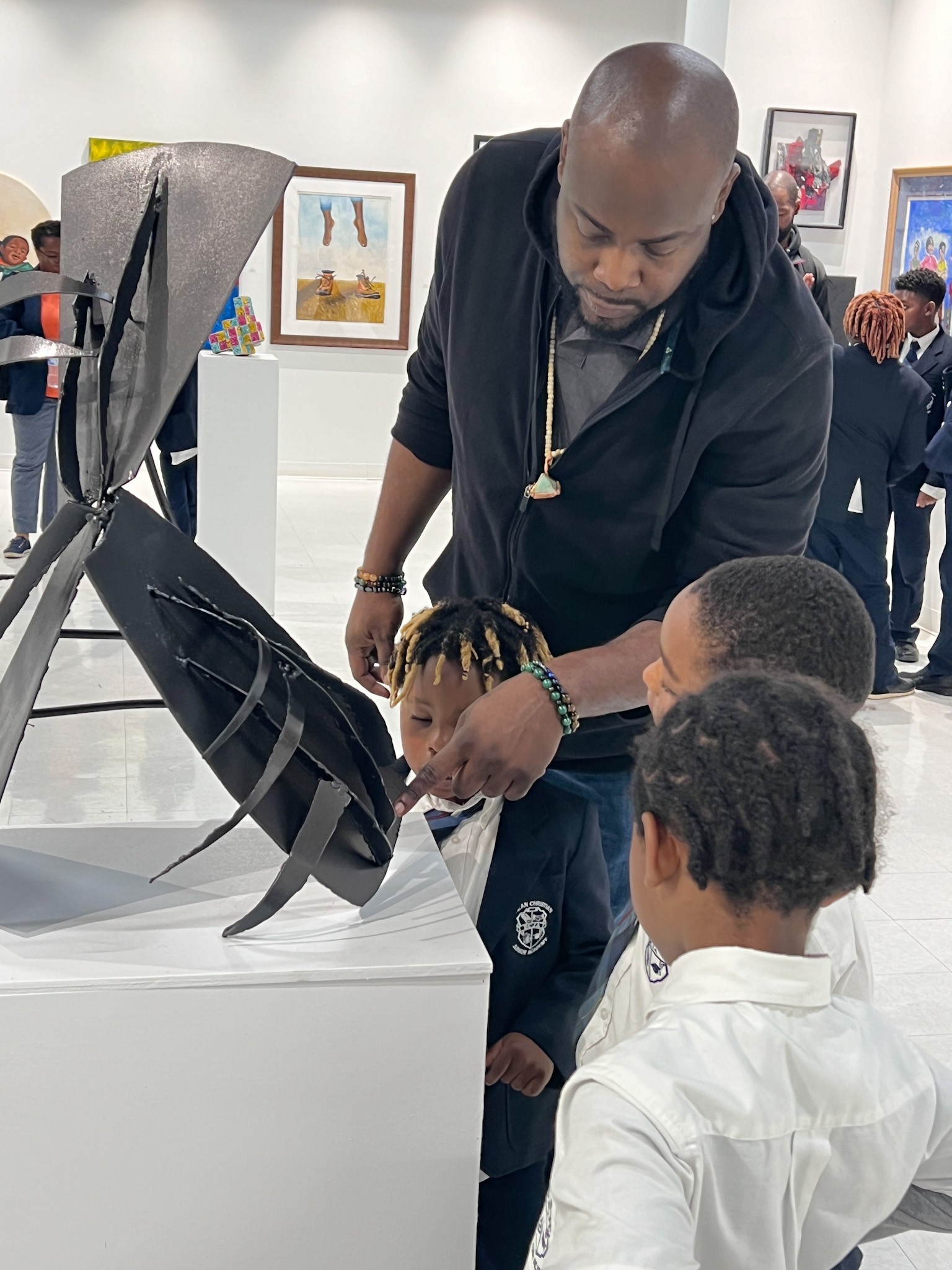
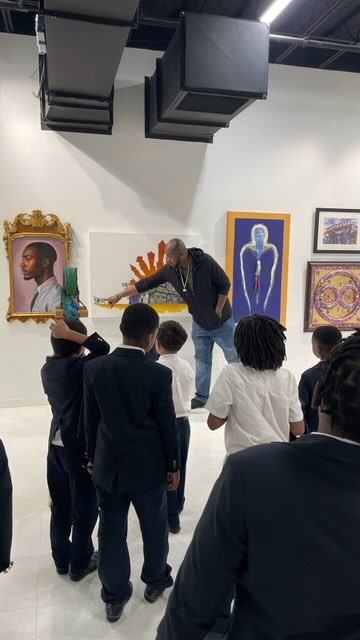
The visit was not only educational but also incredibly enjoyable. The boys interacted with the exhibits, participated in discussions with co-curator rEN Dillard, and even had the chance to meet some of the artists. Their excitement and curiosity were evident as they explored the gallery, making the most of this unique learning opportunity.
Overall, the trip to the “Hold the Line” exhibition was a resounding success. It left a lasting impression on the students, reinforcing the value of art in understanding and expressing complex social themes. The boys left the ArtsXchange with a deeper appreciation for the power of art to convey important messages and a renewed sense of inspiration.
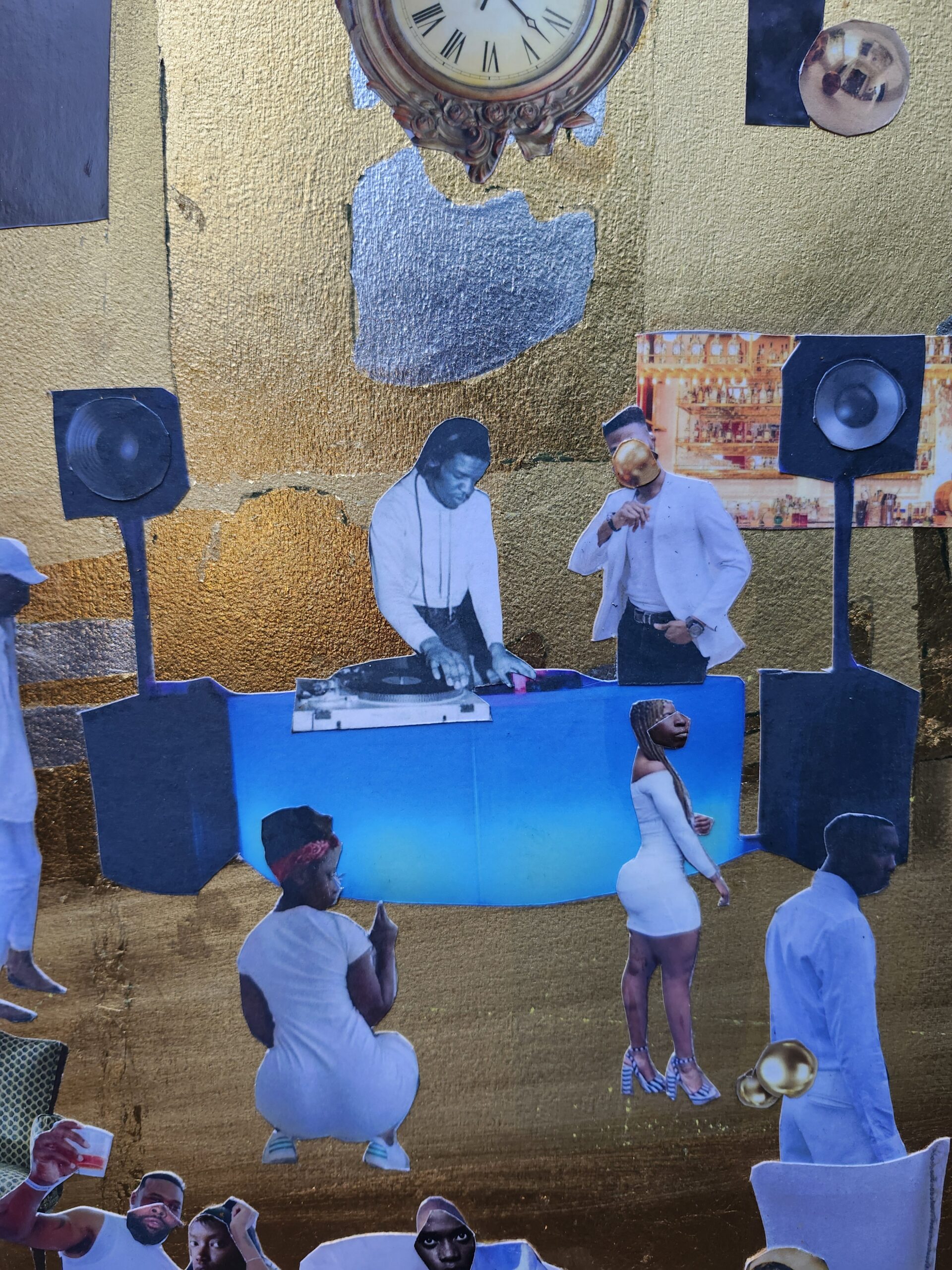
“Before I Let Go” – A Cosmic Groove on the Mothership
In the heart of the Mothership, stardust mingled with rhythm in a grand ballroom bathed in celestial gold. A select group of chosen ones, their melanin kissed by cosmic winds, stepped onto a luminescent dance floor.
Their attire—ivory silks, shimmering like comet trails—hinted at their purpose. They were more than dancers; they were conduits of ancestral memory, guardians of joy, and emissaries of funk. The Mothership hummed in anticipation, its golden hull resonating with their collective energy.
As the opening chords of “Before I Let Go” reverberated, the crowd hushed. The song, a timeless groove by Frankie Beverly, bridged generations. It was the anthem of Black joy, woven into DNA, heard at summer barbecues, family reunions, and Saturday mornings.
The ballroom pulsed. The chosen ones steeped in rhythm, stepped and swirled. The Mothership’s gravity yielded to their brilliance. The ivory-clad dancers merged—past and future, earthly and cosmic. They danced for ancestors who whispered encouragement across time.
And so they spun, leaving stardust footprints. The ballroom blurred—a kaleidoscope of unity. The Mothership rejoiced, its cosmic heart beating in sync with theirs. As the song reached its crescendo, they defied gravity, surrendering to the groove until dawn broke the spell.
And so it was—a celestial communion, a funk-fueled ode to resilience. The chosen ones, their souls alight, danced brilliantly on the Mothership, their bodies pulsing with the rhythm of the cosmos.
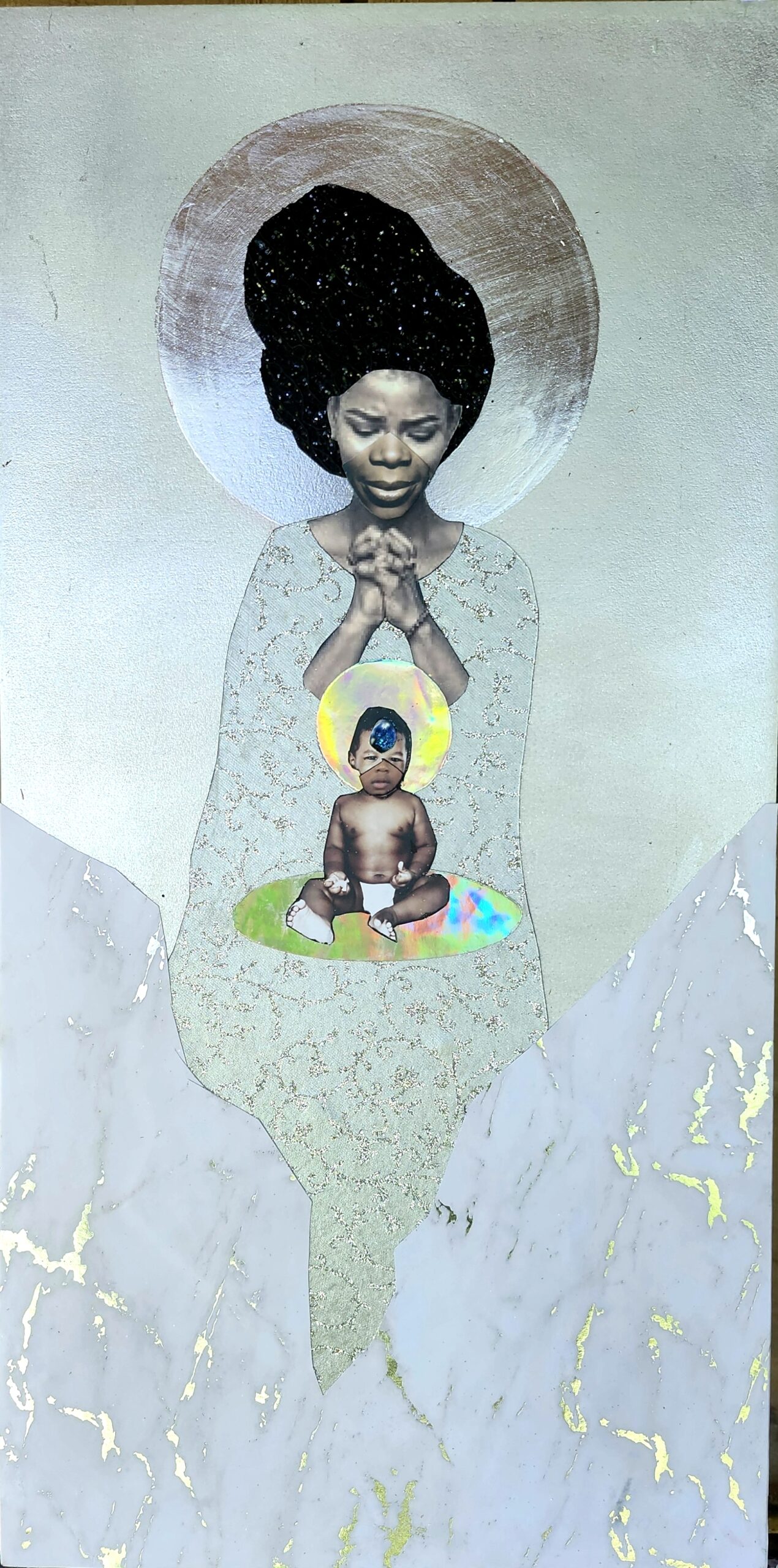
In the heart of Atlanta, where the city’s pulse thrummed through the streets, Kiano was born. His arrival was marked by both joy and sorrow—the indigo child, a beacon of hope, emerged into a world tinged with loss.
His mother, a woman of quiet strength, had always sensed something extraordinary about her unborn child. She spoke of dreams where ethereal beings whispered secrets to her, guiding her through the veil that separated realms. As labor pains wracked her body, she clung to those visions, seeking solace in their otherworldly presence.
But fate is a fickle weaver, and as Kiano took his first breath, his mother surrendered hers. The room filled with both the cries of a newborn and the hushed whispers of unseen guardians. They cradled her departing soul, promising to watch over her child.
Kiano’s forehead bore an indigo light—a luminous mark where his third eye should have opened. It pulsed with ancient energy, connecting him to realms beyond mortal comprehension. The midwife gasped, recognizing the significance. “He carries the light,” she murmured, wiping tears from her eyes.
In the days that followed, Kiano grew under the watchful eyes of the sacred feminine. They visited him in dreams, their forms shifting between mist and substance. They whispered forgotten truths, filling his mind with cosmic knowledge. He learned of forgotten civilizations, star maps etched in constellations, and the delicate balance between light and shadow.
As Kiano matured, so did his abilities. He could heal with a touch, mending broken bones and wounded hearts. His laughter brought forth flowers, and his tears cleansed polluted waters. The indigo light intensified, casting a halo around him—a beacon for those attuned to its frequency.
Word spread of the boy with the radiant forehead. Seekers arrived from distant lands, drawn by prophecies etched in ancient texts. They bowed before Kiano, their eyes wide with reverence. “You are the harbinger,” they whispered. “The first of a new era.”
Kiano listened, absorbing their hopes and fears. He understood his purpose—to bridge worlds, to awaken dormant gifts in others. The wave of indigo children followed—a generation born with starlight in their veins. They possessed empathy beyond measure, intuition that pierced illusions, and a collective mission: to heal a fractured Earth.
Together, they planted gardens in barren deserts, sang forgotten songs to soothe troubled minds, and danced beneath moonlit skies, weaving threads of unity. The indigo light pulsed within each child, a symphony of colors harmonizing with Earth’s heartbeat.
And so, Kiano led them—a luminary among luminaries. His mother’s spirit whispered through the winds, guiding him toward forgotten ley lines and hidden portals. The sacred feminine remained by his side, veiled yet ever-present.
As the world shifted, old structures crumbled. Fear and division battled against love and awakening. But Kiano stood firm, his indigo light blazing. He taught that power need not be wielded, but shared; that wisdom flowed from unity, not dominance.
And so, the indigo children—Kiano’s kin—wove a new tapestry. They healed wounds, mended hearts, and whispered forgotten truths. The world watched, awestruck, as their light spread, illuminating the path toward a better tomorrow.
In the heart of Atlanta, where the city’s pulse thrummed through the streets, Kiano stood—a bridge between realms, a living testament to the sacred feminine’s promise. And as the sun dipped below the horizon, casting indigo hues across the sky, he knew that their journey had just begun.
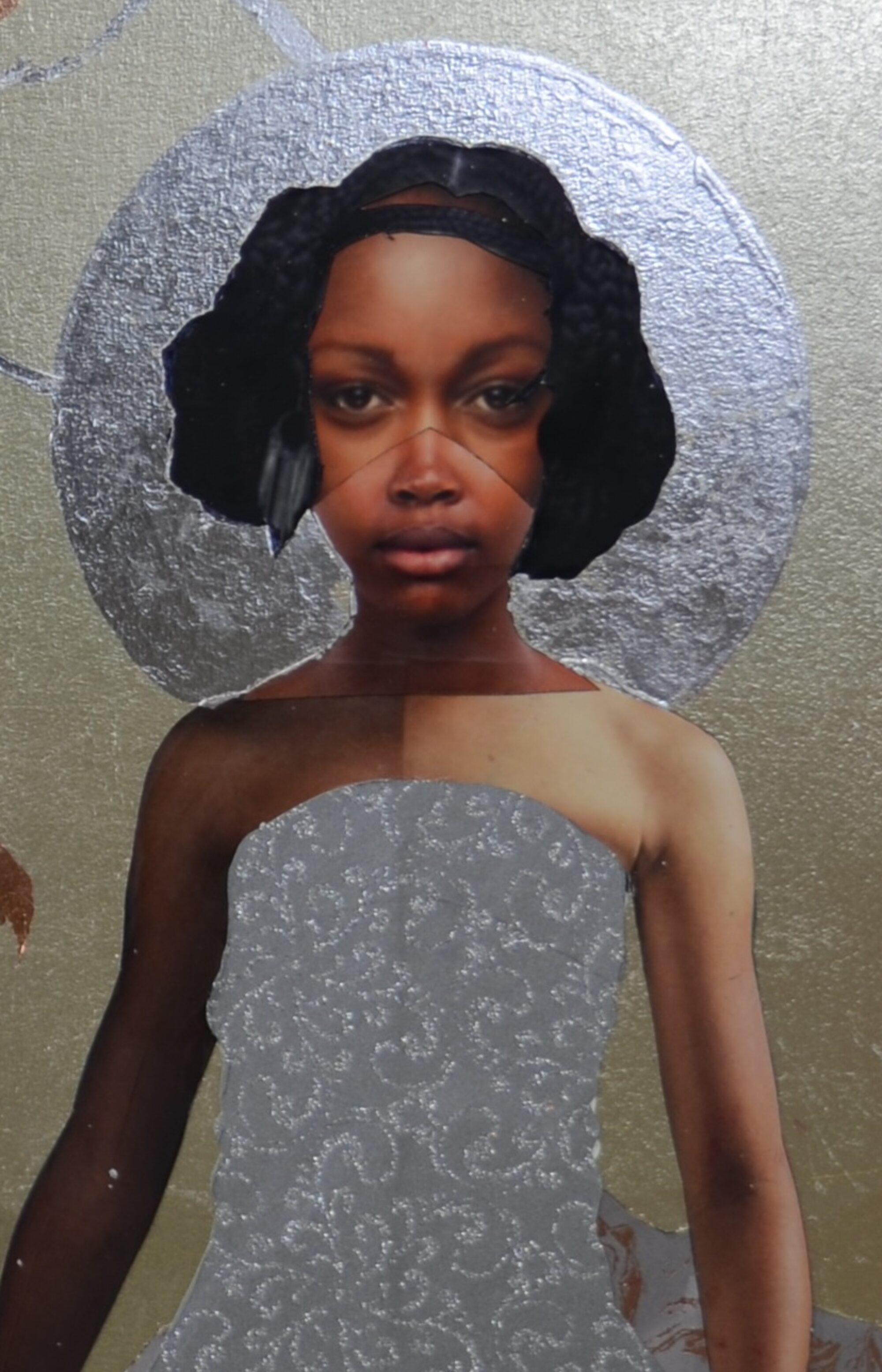
“Indigo Child”
12x24in
Mixed Media with Silver
rEN Dillard
In the bustling streets of Dakar, Senegal, where the scent of spices mingled with the ocean breeze, lived a young student named Akasha. Her skin bore the sun’s kiss, and her eyes held the promise of hidden realms. Akasha had moved to Athens as a child, but her heart remained tethered to the magic of her homeland.
Her modest apartment, adorned with woven tapestries and flickering candles, housed her collection of beautiful crystals. Each crystal hummed with energy—a silent symphony of possibility. Akasha studied their hues—the azure of the sky just before dawn, the amber of sun-kissed sand, and the iridescence of moonlight on water. She yearned to unlock their mysteries, to dance with them in the spaces between worlds.
But Akasha’s path was veiled in uncertainty. The elders whispered warnings—the magic she sought was forbidden, dangerous. “Stick to getting your education,” they cautioned. “Tend to your studies, your job, and forget these fanciful notions.”
Yet Akasha persisted. She meditated by the gnarled oak tree in a neighborhood park, her palms pressed against its ancient bark. She whispered incantations to the wind, hoping it would carry her desires to the spirits. And one moonless night, as the city lights painted constellations across the sky, a figure appeared—a woman.
“Amara,” Akasha breathed, recognizing her from the village tales. Amara was a sorceress—a keeper of ancient knowledge, a bridge between realms. Her presence crackled with energy, like lightning before a storm.
“You seek magic,” Amara said, her voice a melody of forgotten tongues. “But magic seeks the worthy. Are you ready, child?”
Akasha hesitated, her heart fluttering like a trapped bird. “I am,” she whispered. “Teach me.”
And so, their lessons began. Amara taught her to listen—to the rustle of leaves, the heartbeat of stones, and the pulse of the earth. She revealed the language of crystals—their vibrations, their memories etched in time. Akasha learned to levitate crystals, to summon raindrops, and to heal wounds with whispered spells.
But Amara was more than a teacher; she was a mirror reflecting Akasha’s doubts. “Magic,” she said, “is not about control. It’s about surrender—to the flow of life, to the unseen currents. You are a vessel, not a master.”
As seasons wove their tapestry, Akasha blossomed. She danced with fireflies in Piedmont Park, painted her dreams on canvas, and wove spells into her braids. The city watched in awe as she mended broken hearts and whispered courage to the fearful.
Yet Amara remained elusive, appearing when the moon hid its face. “Trust the timing,” she murmured. “The student shapes the teacher as much as the other way around.”
One day, Amara vanished. Her robes lay by the gnarled oak, dew-kissed and abandoned. Akasha wept, her tears mingling with the earth. But in her grief, she heard Amara’s voice—a whisper carried by the wind.
“Remember,” Amara said. “The teacher fades, but the student becomes the teacher. Seek the next seeker, and pass the torch.”
And so, Akasha wandered the streets, sharing her knowledge with those who hungered for magic. She became a beacon—a guide for lost souls, a weaver of dreams. Her name echoed through time, whispered by fireflies and etched into crystal caves.
For when the student is ready, the teacher will appear—a truth woven into the fabric of existence, binding hearts across realms and lifetimes.
“When The Student Is Ready
”12×24
Mixed Media Collage with Variegated Silver Leaf, and Dutch Gold Leaf on Panel
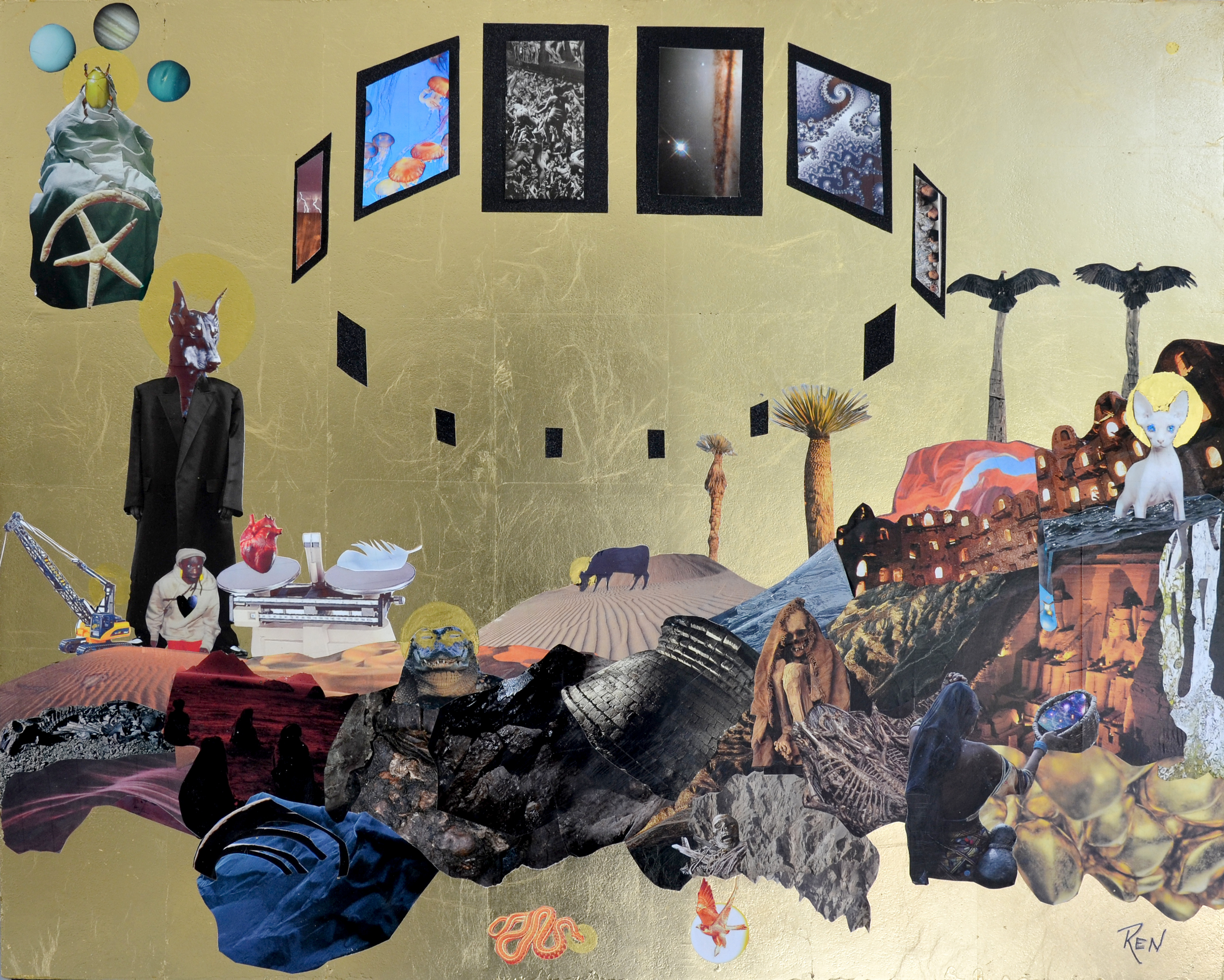
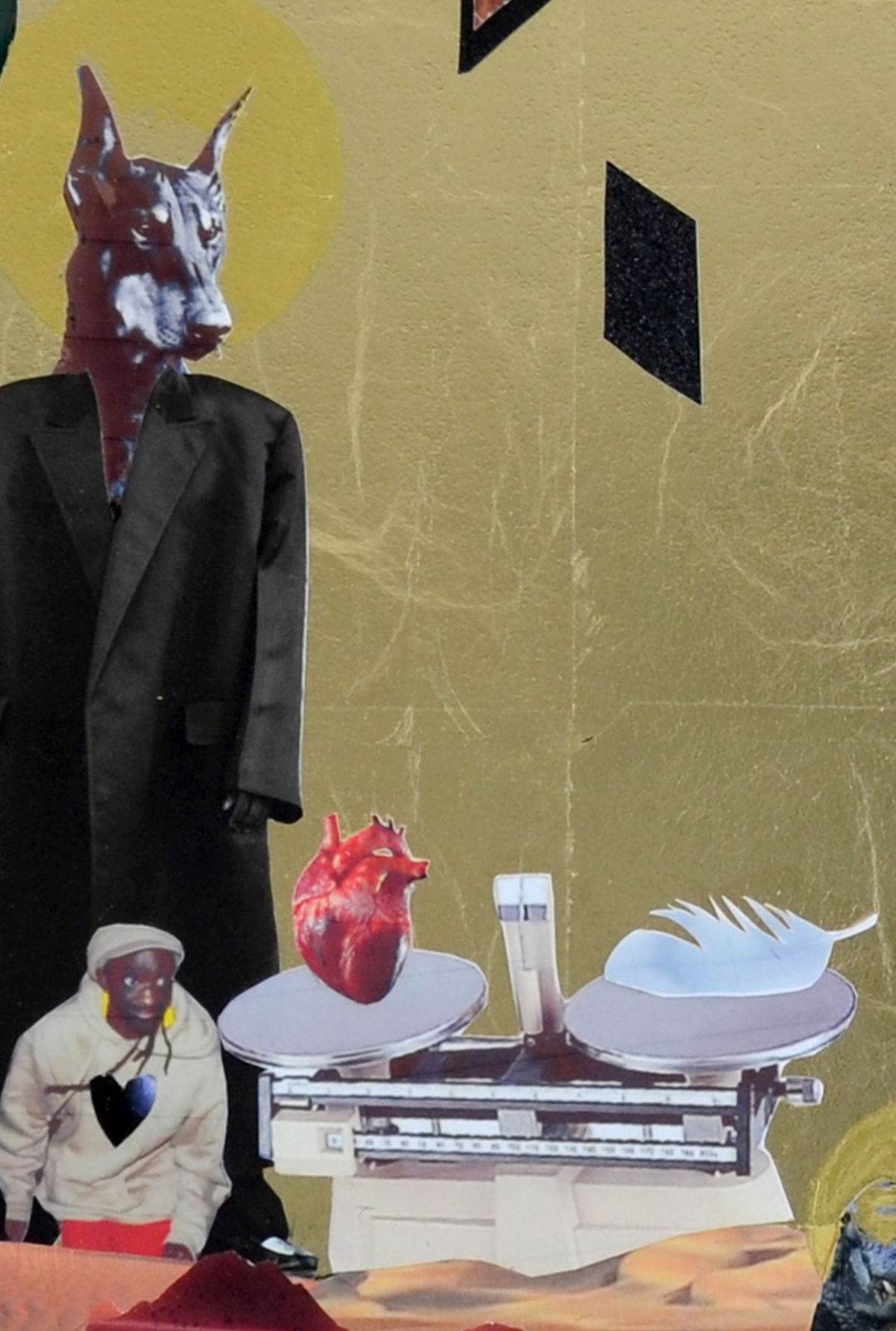
The Savannah night was thick with mystery, the Spanish moss hanging low like veils between worlds. Clinton D. Powell, poet and seeker, stood at the threshold of the Duat—the ancient Egyptian underworld. Anubis, jackal-headed and solemn, guided him through the shimmering veil.
The air smelled of papyrus and sand, and the walls bore inscriptions—hieroglyphs etched by forgotten scribes. The path ahead was both familiar and otherworldly, like the verses Clinton had penned under moonlight.
Anubis led him to the Scales of Ma’at—a delicate balance that held the fate of souls. On one side rested a feather, ethereal and weightless. On the other, an empty vessel awaited Clinton’s heart. His ink-stained fingers trembled as he placed it there.
“Let your heart be weighed against truth,” Anubis intoned, his voice echoing through the cavernous hall. The feather quivered, and the cosmic winds held their breath. Clinton’s heart—the repository of love, pain, and wonder—was light, its beats in harmony with the celestial rhythm.
“Speak,” Anubis commanded. “Tell your story.”
And so, Clinton recited his poems—the ones written in dimly lit cafes, the ones whispered to the moon, the ones etched into the bark of ancient trees.
Anubis nodded. “Your heart is light, and your words resonate across dimensions. You may ascend.”
Clinton stepped into the cosmic light, leaving behind the scales and the mirror. His mortal form dissolved, and he became stardust, woven into the fabric of existence.
Somewhere in the cosmic expanse, Anubis listened—the jackal-headed guardian attuned to the rhythm of Clinton’s immortal verses. And as the Savannah River whispered secrets, the poet’s legacy echoed through eternity.
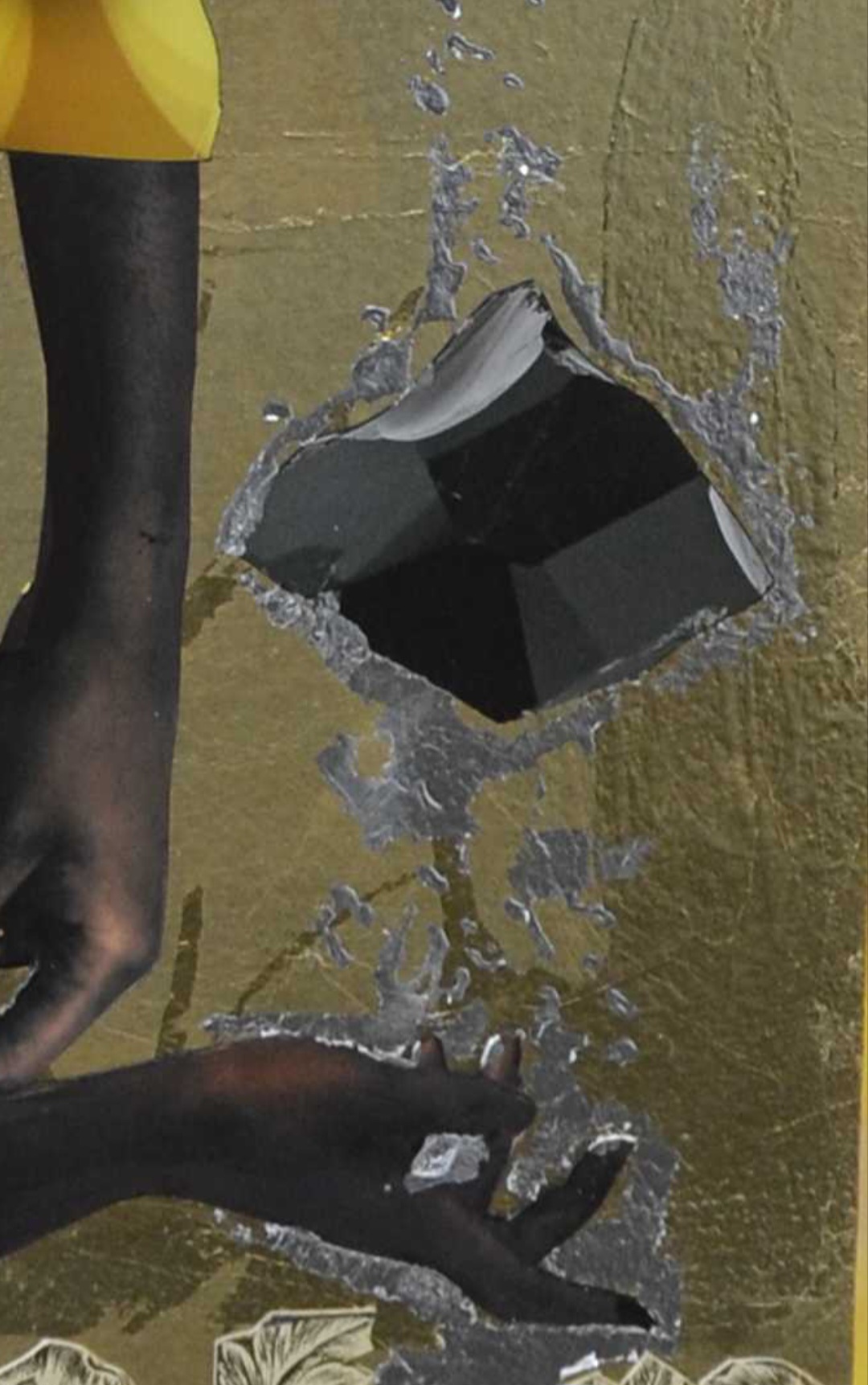
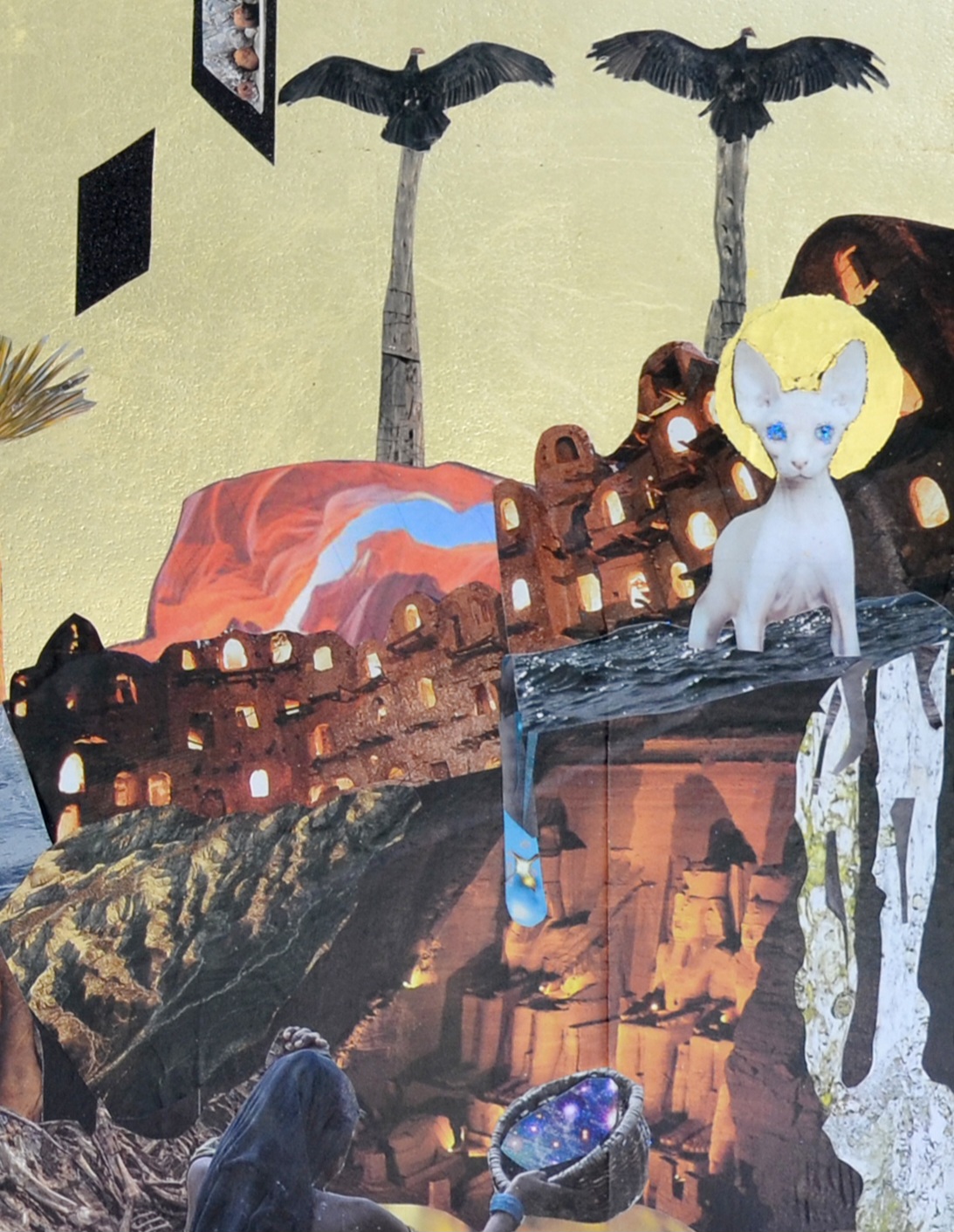
“AnubisTaking ClintonTo TheScales” 30x40in Mixed Media Collage with 23k Gold by: rEN Dillard
Reference video link American Gods – “Mrs Fadil and Anubis”: